
In 2026, businesses are no longer limited to a single communication channel. Customers expect fast, convenient, and personalized interactions — whether they are browsing your website or messaging you directly on WhatsApp.
This has led to a common question for business owners:
Should you use a website chatbot or a WhatsApp chatbot?
The short answer is: both are powerful, but they serve different purposes.
To make the right decision, you need to understand how each one works, where it performs best, and how it impacts your sales and customer support.
Let’s break it down in detail.
What Is a Website Chatbot?
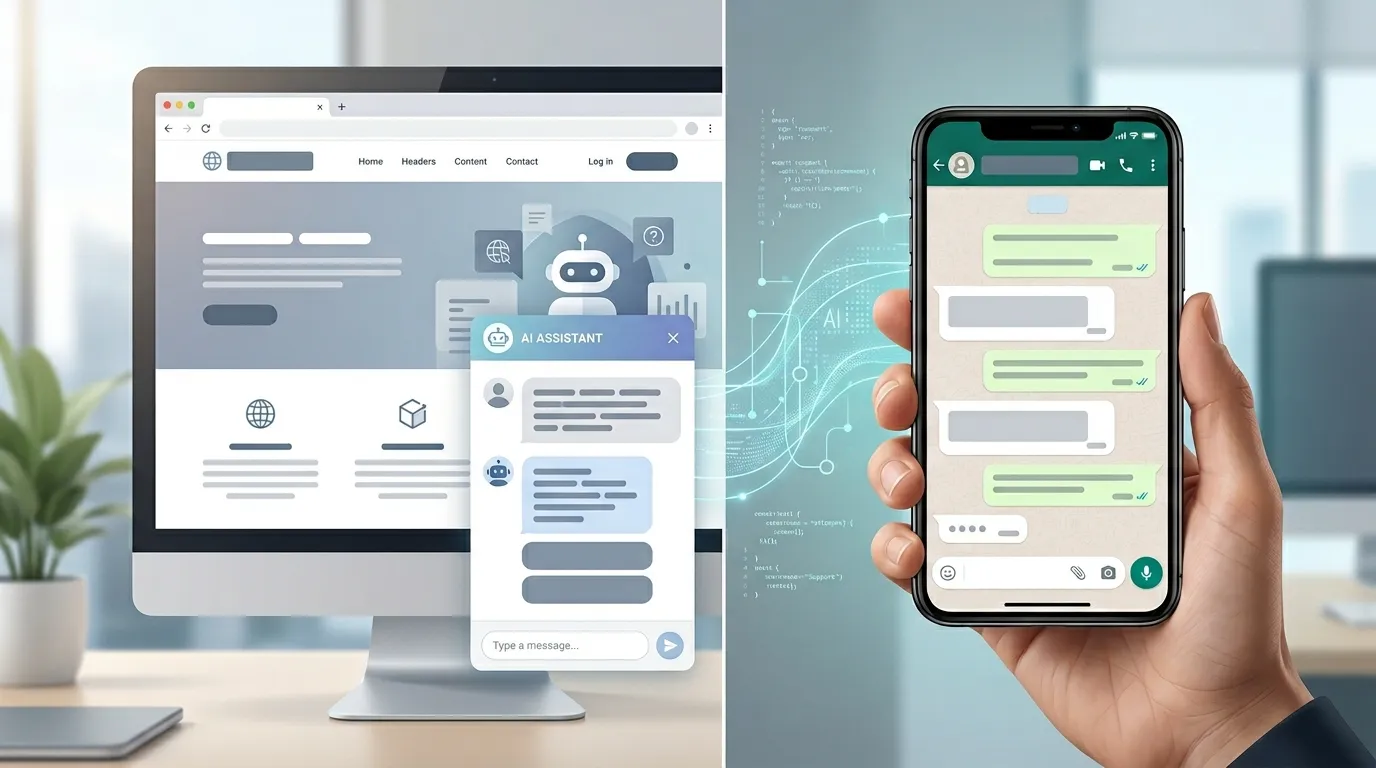
A website chatbot is an AI-powered assistant embedded directly on your website. It interacts with visitors in real time, helping them navigate your services, answer questions, and take action.
It typically appears as a chat widget on the bottom corner of your site.
Key Functions:
- Engage website visitors instantly
- Capture leads directly from traffic
- Provide product or service information
- Guide users through your sales funnel
Website chatbots are designed to convert passive visitors into active leads.
What Is a WhatsApp Chatbot?
A WhatsApp chatbot operates within WhatsApp, allowing businesses to interact with users through one of the most widely used messaging platforms in the world.
Instead of waiting for users to visit your website, it brings your business directly into their daily communication space.
Key Functions:
- Handle direct customer conversations
- Send automated replies and updates
- Follow up with leads
- Provide ongoing customer support
WhatsApp chatbots are built for engagement, retention, and communication.
Key Differences Between Website and WhatsApp Chatbots
1. User Intent
Website visitors are often in the exploration stage. They are browsing, comparing, and learning.
WhatsApp users, on the other hand, usually have higher intent. They are reaching out directly, which means they are closer to making a decision.
Insight:
Website chatbot = Discovery stage
WhatsApp chatbot = Decision stage
2. Conversion Potential
Website chatbots help capture leads from traffic.
WhatsApp chatbots help convert those leads into customers.
On a website, users may leave without taking action. On WhatsApp, conversations feel more personal and continuous.
Result:
WhatsApp chatbots often have higher conversion rates.
3. Engagement Level
Website engagement is session-based. Once the user leaves, the interaction ends.
WhatsApp allows ongoing conversations.
You can:
- Send follow-ups
- Share updates
- Re-engage inactive users
This makes WhatsApp a stronger channel for long-term engagement.
4. Response Experience
Website chatbots provide instant answers within the browsing experience.
WhatsApp chatbots provide instant answers within a familiar messaging environment.
Many users feel more comfortable chatting on WhatsApp compared to a website interface.
5. Data Collection
Website chatbots collect structured lead data such as:
- Name
- Requirements
WhatsApp chatbots collect conversational data and behavioral insights over time.
Both are valuable, but serve different purposes.
6. Automation Capabilities
Both chatbot types can automate tasks, but in different ways.
Website Chatbots:
- Lead capture
- Service recommendations
- On-site guidance
WhatsApp Chatbots:
- Follow-ups
- Reminders
- Customer support
- Broadcast messaging (where applicable)
7. Customer Support Efficiency
Website chatbots handle initial queries efficiently.
WhatsApp chatbots handle ongoing support better.
For example:
- Website chatbot answers FAQs
- WhatsApp chatbot continues the conversation after the user leaves
This creates a seamless support experience.
Which One Is Better for Your Business?
The truth is — it depends on your business goals.
Choose Website Chatbots If:
- You want to convert website traffic into leads
- You need instant engagement on landing pages
- You want to guide users through your services
Choose WhatsApp Chatbots If:
- You want higher conversion rates
- You need direct communication with customers
- You want to automate follow-ups and support
The Best Strategy: Use Both Together
Instead of choosing one over the other, the most effective strategy is to combine both.
Here’s how a smart system works:
- A visitor lands on your website
- The website chatbot engages and captures the lead
- The conversation shifts to WhatsApp
- The WhatsApp chatbot continues follow-ups and converts the lead
This creates a complete automation loop:
- Attraction → Engagement → Conversion → Retention
By integrating both chatbots, you build a powerful system that covers the entire customer journey.
Real Business Impact
Businesses that use both website and WhatsApp chatbots experience:
- Higher lead capture rates
- Better customer engagement
- Faster response times
- Increased conversions
- Improved customer satisfaction
This is because they are not relying on a single touchpoint.
They are meeting customers wherever they are.
Final Thoughts
Website and WhatsApp chatbots are not competitors — they are complementary tools.
If you want to grow your business in 2026, you need both:
- Website chatbots to capture attention
- WhatsApp chatbots to close deals and build relationships
Together, they create a seamless, automated, and scalable system that drives real business results.
If your business is still relying only on manual communication or a single channel, you are leaving a lot of opportunities untapped.