
In 2026, AI chatbots are no longer limited to large enterprises. Small businesses, startups, and agencies are now using them to compete with bigger players — without increasing costs or hiring large teams.
The real power of AI chatbots lies in their versatility.
They can handle multiple roles at once: sales assistant, support agent, lead generator, and even a booking manager. When implemented correctly, they can automate large parts of your business operations.
But the key question is: how exactly can you use AI chatbots in your business?
Let’s explore the most practical and high-impact use cases that are delivering real results today.
1. Lead Generation and Qualification
For most businesses, generating high-quality leads is the top priority.
AI chatbots can transform your website into a lead generation machine by engaging visitors instantly and guiding them through a structured conversation.
Instead of using traditional forms, chatbots:
- Ask relevant questions
- Collect user details naturally
- Qualify leads in real time
For example:
A chatbot can ask about budget, requirements, and timeline before passing the lead to your team.
This ensures you only deal with serious prospects.
2. 24/7 Customer Support
Customers expect quick answers — regardless of time.
AI chatbots provide round-the-clock support without increasing your workload.
They can handle:
- Frequently asked questions
- Service inquiries
- Basic troubleshooting
- Order or booking-related queries
This reduces response time and improves customer satisfaction.
For small businesses with limited teams, this is a major advantage.
3. Appointment Booking and Scheduling
Manual booking processes can be time-consuming and inefficient.
AI chatbots can automate the entire scheduling process.
They can:
- Check availability
- Suggest time slots
- Confirm bookings
- Send reminders
This is especially useful for:
- Service-based businesses
- Consultants
- Agencies
It eliminates back-and-forth communication and saves time for both you and your customers.
4. Sales Funnel Automation
AI chatbots can guide users through your entire sales funnel.
From the first interaction to the final conversion, everything can be automated.
A chatbot can:
- Greet the user
- Understand their needs
- Recommend solutions
- Handle objections
- Capture contact details
This structured approach ensures that every visitor is guided toward a clear outcome.
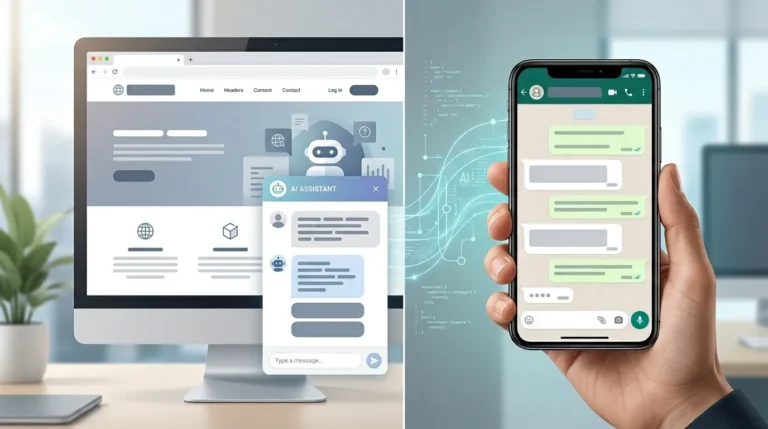
5. WhatsApp Marketing and Follow-Ups
WhatsApp has become one of the most powerful communication channels.
AI chatbots can automate:
- Lead follow-ups
- Reminders
- Updates
- Re-engagement campaigns
Unlike emails, WhatsApp messages have higher open and response rates.
This makes it ideal for nurturing leads and increasing conversions.
6. E-commerce Support and Sales
For online stores, AI chatbots can act as virtual sales assistants.
They can:
- Help users find products
- Answer product-related questions
- Suggest recommendations
- Assist with checkout
This improves the shopping experience and increases the chances of purchase.
7. Client Onboarding for Agencies
Agencies often deal with multiple clients and complex onboarding processes.
AI chatbots can simplify onboarding by:
- Collecting project requirements
- Asking structured questions
- Sharing initial information
- Setting expectations
This ensures consistency and saves time for your team.
8. Internal Team Automation
AI chatbots are not just for customers — they can also be used internally.
They can help with:
- HR queries
- Employee onboarding
- Internal documentation access
- Task automation
This improves efficiency within your organization.
9. Feedback Collection and Surveys
Understanding customer feedback is essential for growth.
AI chatbots can collect feedback in a conversational way, which feels more natural than traditional forms.
They can:
- Ask follow-up questions
- Understand user sentiment
- Identify areas of improvement
This helps you make data-driven decisions.
10. Event and Webinar Registrations
If you host events, webinars, or workshops, AI chatbots can handle registrations seamlessly.
They can:
- Collect attendee details
- Share event information
- Send reminders
- Provide updates
This creates a smooth experience for participants and reduces manual effort.
11. Multi-Platform Communication Management
Managing conversations across multiple platforms can be overwhelming.
AI chatbots can centralize communication by integrating with:
- Websites
- CRM systems
This ensures all interactions are organized and easily accessible.
12. Re-Engaging Lost Visitors
Most website visitors leave without taking action.
AI chatbots can help bring them back into the funnel.
They can:
- Offer assistance before exit
- Provide incentives
- Encourage users to take action
This increases conversion rates and reduces lost opportunities.
Why These Use Cases Matter
The biggest advantage of AI chatbots is that they allow small businesses and startups to operate like larger companies.
You can:
- Automate repetitive tasks
- Improve customer experience
- Increase efficiency
- Scale without hiring
For agencies, chatbots also help in delivering better services to clients by automating processes and improving communication.
Final Thoughts
AI chatbots are not just tools — they are business enablers.
Whether you are a small business owner, a startup founder, or an agency, there are multiple ways you can use chatbots to improve your operations.
The key is to start with the right use cases based on your goals.
Once implemented, AI chatbots can:
- Save time
- Reduce costs
- Increase conversions
- Improve customer satisfaction
In 2026, businesses that adopt automation early will always have an edge over those that rely on manual processes.